
di Paola Redemagni
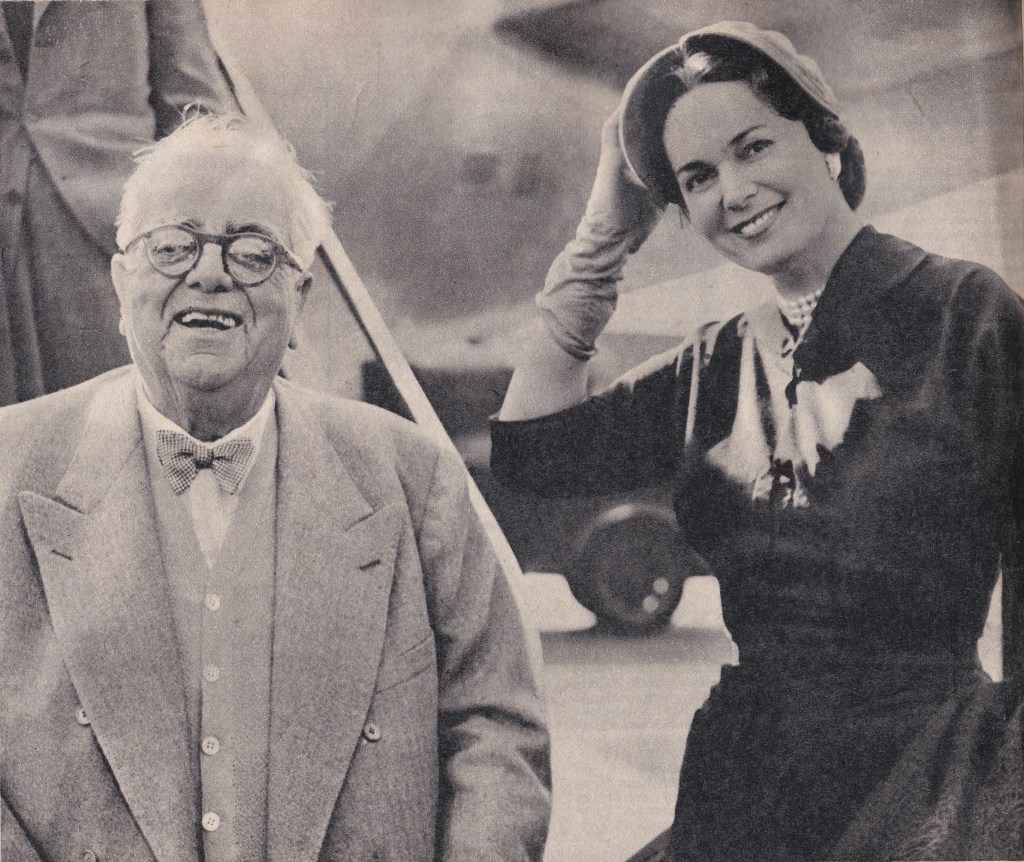
Il mausoleo del terzo Aga Khan Muhammed Shah è un dono d’amore da parte di sua moglie: la bella Yvonne Blanche Labrousse, miss Francia nel 1924.
I due si conoscono alla festa di una principessa egiziana e si sposano tredici mesi dopo, nel 1944. Lei ha 38 anni, lui 67 ed è uno degli uomini più importanti del mondo musulmano: infatti, è al contempo il capo politico e religioso della corrente sciita ismaelita nizirita e la sua autorità viene riconosciuta dall’India fino ai paesi del vicino oriente.
Nella lingua persiana la parola “Aga” significa Signore ed è utilizzata per indicare un uomo d’onore, mentre “Khan” indica il sovrano.
Bella e affascinante lei; colto, ricchissimo e potente lui, vivono un amore da fiaba tra le cronache del jet set dell’epoca.
Alla sua morte, nel 1957, Muhammed Shah chiede di essere sepolto in Egitto, ad Assuan: città che conosce ed ama. Yvonne commissiona allora un mausoleo sulla collina prospiciente la città, poco distante dall’antico monastero di San Simeone e dalla villa attualmente proprietà del quarto Aga Khan.
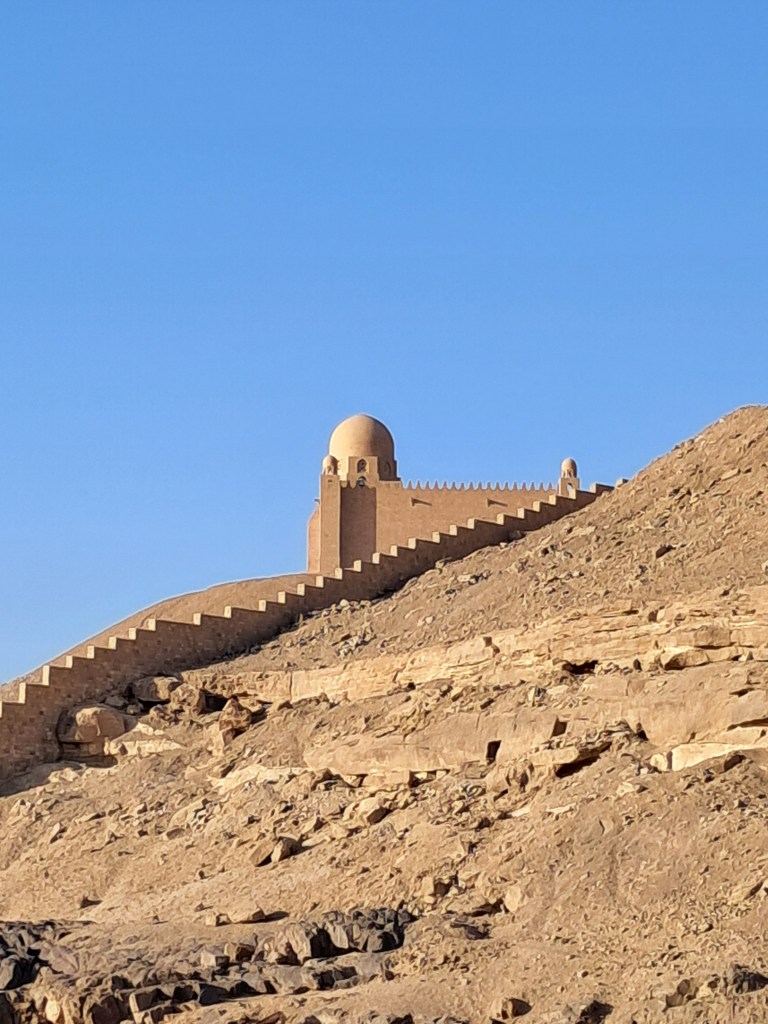
Sulla riva occidentale del Nilo, fa erigere una grande costruzione nelle forme e nello stile delle tombe tradizionali fatimidi: il corpo principale si presenta come un parallelepipedo compatto in pietra calcarea rosa, privo di aperture, con mura merlate e un’unica porta di accesso preceduta da una scalinata semicircolare, che guarda a ovest, verso il tramonto. L’edificio si conclude con una cupola ogivale innestata su un tamburo di forma ottagonale, aperto da otto finestre ad arco acuto che inondano di luce l’interno, e da quattro torrette angolari, anch’esse coronate di un piccolo tamburo circolare e da una piccola cupola.
La tomba viene completata nel 1959 e l’Aga Khan viene traslato qui, in un sarcofago in marmo bianco di Carrara: la leggenda vuole che ogni giorno la moglie vi deponesse una rosa rossa, chiedendo al giardiniere di provvedere quando non era presente.
Il mausoleo è stato visitabile fino al 1997 quando, per volere della vedova, è stato chiuso al pubblico per lasciare riposare il marito in pace.
Dal 2001 anche Yvonne riposa nel mausoleo, accanto al marito, e ancora oggi è ricordata per la sua fedeltà alla sua memoria.
Dear friends speaking English, this is an home-made blog. I have no money to pay a professional translator, so I write English post by myself and – as you can see – I can’t write English language very well. So you can find a lot of mistakes in the articles: I beg your pardon. My English language level is: F(unny)! Will you pardon me?
The mausoleum of the third Aga Khan Muhammed Shah is a gift of love from his wife: the beautiful Yvonne Blanche Labrousse, Miss France in 1924.
The two met at the party of an Egyptian princess and were married thirteen months later, in 1944. She is 38 years old, he is 67 and is one of the most important men in the Muslim world: he is both the political and religious leader of the Nizirite Ismaelite Shiite current and his authority is recognised from India as far as the countries of the Near East.
She was beautiful and charming; he was cultured, rich and powerful: they lived a fairytale love affair among the chronicles of the jet set of the time.
On his death in 1957, Muhammed Shah asked to be buried in Egypt, in Aswan: a city he knew and loved. Yvonne then commissioned a mausoleum on the west bank of the Nile, on the hill overlooking the city, not far from the ancient monastery of St Simeon.
A large building was erected in the style of traditional Fatimid tombs: the main body is a compact parallelepiped in pink limestone, with no openings, crenellated walls and a single entrance door preceded by a semicircular staircase, looking westwards, towards the sunset. The building ends with an ogival dome grafted onto an octagonal drum, opened by eight pointed arch windows flooding the interior with light, and four corner turrets, also crowned by a small circular drum and a small dome.
The tomb was completed in 1959 and the Aga Khan was moved here, in a sarcophagus made in Carrara marble. Every day, for many years, his wife placed a red rose there, asking the gardener to provide it when he was not present.
In 1997 the mausoleum closed to the visitors, at the wish of his widow, to let her husband rest in peace. Since 2001, Yvonne also rests in the mausoleum, next to her husband, and is still remembered for her loyalty to his memory.
 Storie di cimiteri