
Di Paola Redemagni
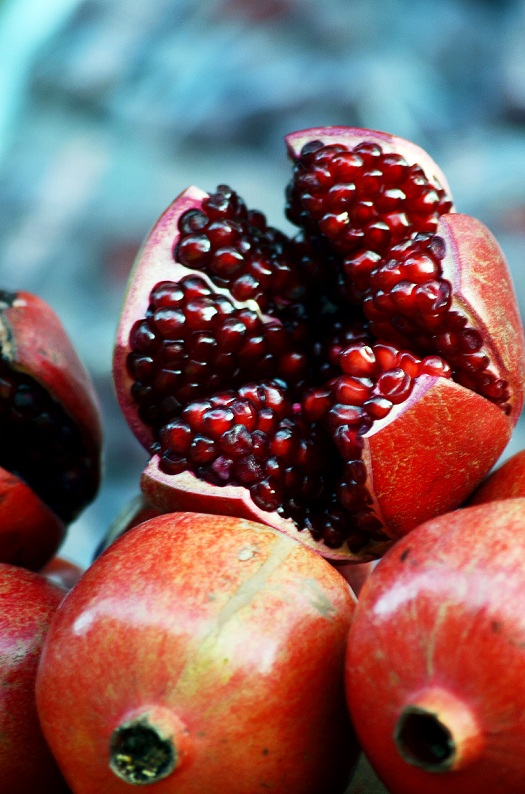
Coltivata fin dall’antichità nel Mediterraneo e nel vicino Oriente sia come pianta ornamentale che medicinale, la melagrana è presente in numerose culture come frutto ricco di significati simbolici.
Il suo legame con il mondo dell’oltretomba è strettissimo e spiega in maniera leggendaria l’alternanza del ciclo delle stagioni. Ce lo racconta per primo Omero nell’Inno a Demetra: Plutone, dio degli Inferi, riceve da suo fratello Zeus il permesso di rapire Persefone e di farne la sua sposa, trascinandola nel suo regno sotterraneo.
La ragazza è figlia di Demetra da cui dipende la fertilità della terra e di conseguenza la sopravvivenza degli uomini. La madre la cerca ovunque, poi, furibonda, inaridisce i raccolti, condannando alla carestia tutti gli esseri viventi.
Plutone acconsente allora a rilasciare la ragazza, ma prima di liberarla fa mangiare a Persefone i chicchi di una melagrana, legandola per sempre a sé: avendo accettato cibo dell’oltretomba, ora Persefone ne fa parte.
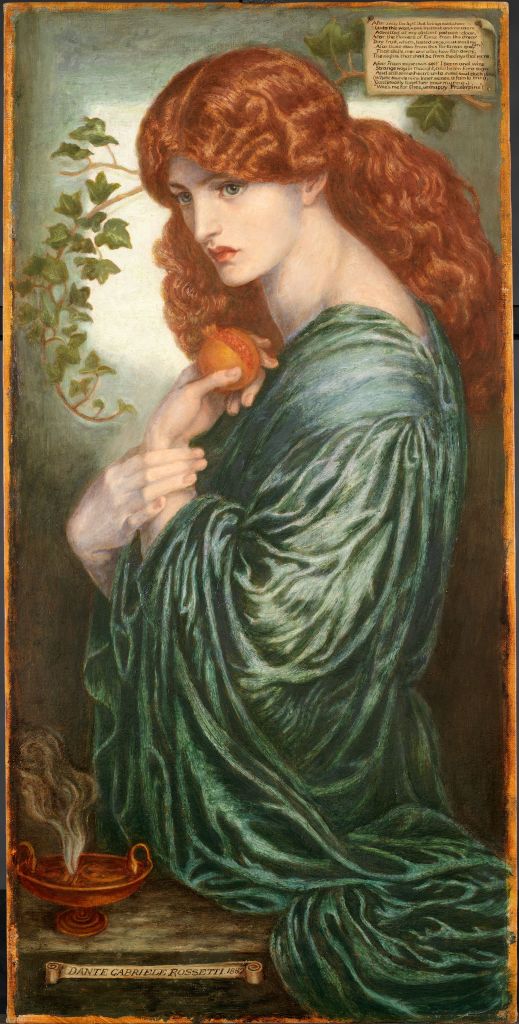
Per evitare ulteriori ritorsioni, Zeus stabilisce che la fanciulla viva per un terzo dell’anno sottoterra con il suo sposo e gli altri due terzi sulla terra, con la madre. Da allora i mesi in cui Demetra ha accanto la figlia coincidono con la primavera e l’estate, quando la natura si risveglia e la terra produce frutto. Al contrario, l’inverno coincide con il soggiorno ultraterreno di Persefone, che regna nell’oltretomba accanto al consorte.
In questo senso, la melagrana diventa così simbolo di appartenenza al regno dei morti.
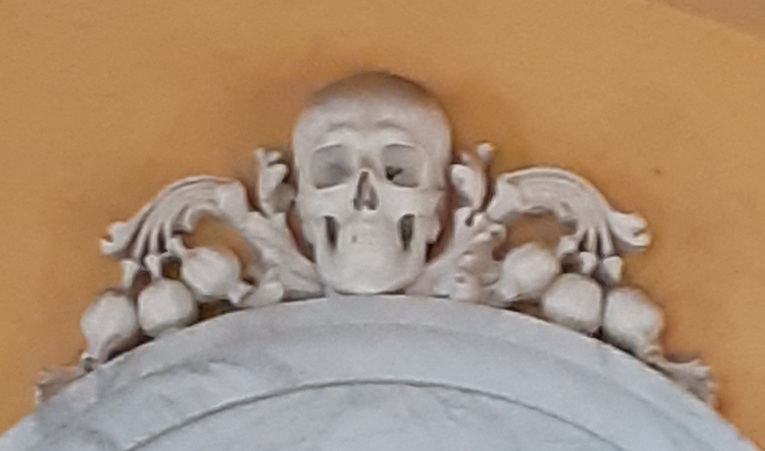
È un frutto molto importante nella religione ebraica: ne parla la Bibbia come uno dei frutti che la terra promessa produce in abbondanza, garantendo la vita. Con i suoi semi stretti l’uno all’altro simboleggia l’abbondanza, la fertilità, la fratellanza. In quanto segno della benedizione di Dio, pendagli a forma di melograno alternati a sonagli d’oro decorano le vesti del Sommo sacerdote ed anche i puntali delle colonne del Tempio di Salomone erano a forma di melagrana. E’ anche simbolo della giustizia, poiché si crede che abbia 613 semi, che rappresentano i 613 articoli della Torah, la legge ebraica.
Nel Cantico dei Cantici è ricordata come simbolo dell’amore fecondo e dell’amore fra gli amanti.
L’amore e il matrimonio sono richiamati anche dal colore rosso dei suoi fiori e dalla grande quantità di semi, che augurano fecondità anche in altre culture. Anche nell’antica Roma Giunone veniva rappresentata con in mano una melagrana, simbolo di matrimonio.
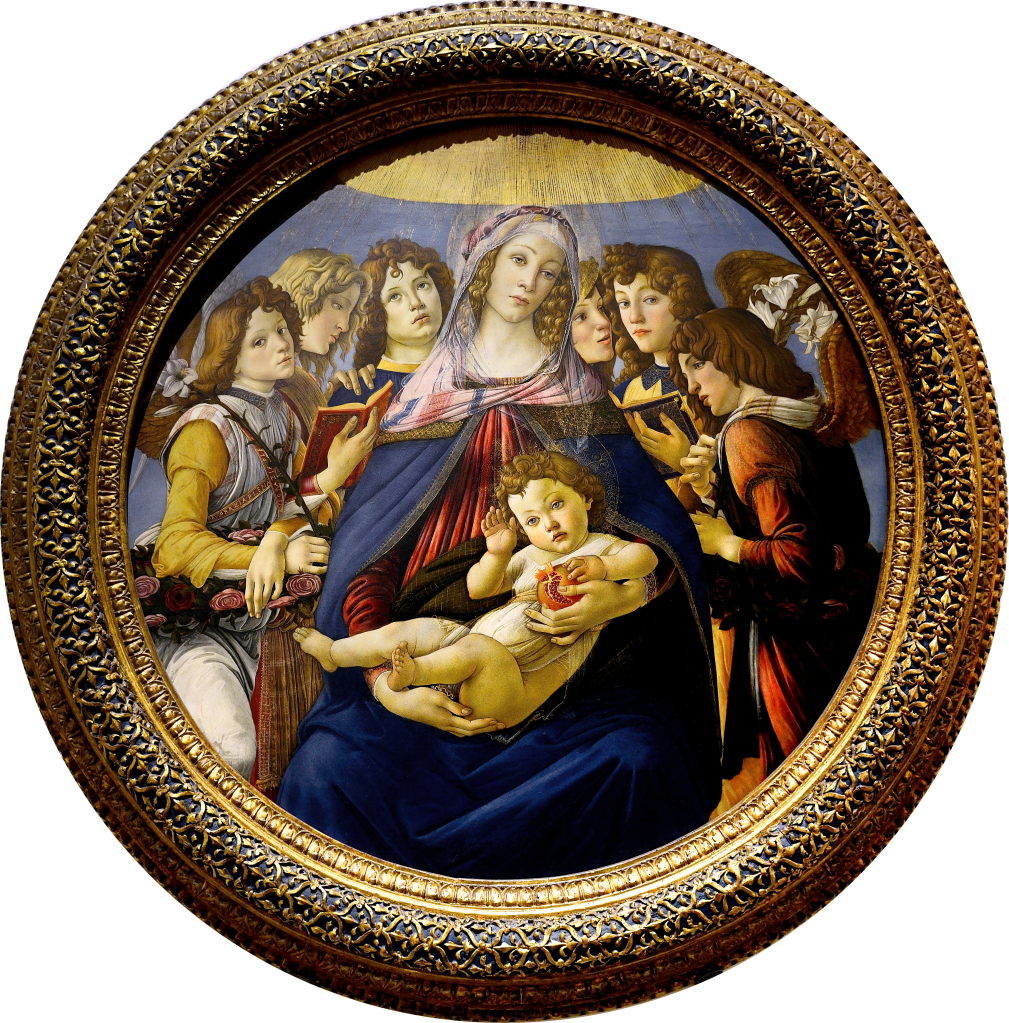
Anche nella religione cristiana rappresenta la benedizione e l’amore divini. Inoltre i semi riuniti rappresentano gli uomini raccolti nella comunità ecclesiale mentre il suo succo ricorda il sangue dei martiri. Per lo stesso motivo spesso è rappresentata nella decorazione dei dipinti religiosi o in mano o accanto a Gesù bambino: in questo caso prefigura la passione che Gesù dovrà subire ma anche la nuova vita di resurrezione, che ne scaturisce.
In epoca barocca la melagrana dischiusa rappresenta la carità: elargizione generosa di doni propri dell’amore misericordioso.
Come simbolo di fratellanza, la melagrana è presente anche nella ritualità massonica. (leggi anche Un massone al Monumentale di Milano – Fedele Sala 2) All’ingresso del Tempio che ospita le riunioni sono presenti due colonne chiamate Boaz e Jachin. Boaz è la colonna degli Apprendisti ed è sormontata da un mappamondo; Jachin è la colonna dei Compagni ed il suo capitello è decorato con tre melagrane semi-aperte, che rappresentano la famiglia massonica i cui membri – come i chicchi – sono uniti dallo spirito di fratellanza.
Dear friends speaking English, this is an home-made blog. I have no money to pay a professional translator, so I write English post by myself and – as you can see – I can’t write English language very well. So you can find a lot of mistakes in the articles: I beg your pardon. My English language level is: F(unny)! Will you pardon me?)
The pomegranate is present in many cultures as an important symbol. Its connection with the world beyond the grave is very close.
Homer in the Hymn to Demeter relates that Pluto, god of the Underworld, kidnaps Persephone and makes her his bride, dragging her into his underground realm. The girl is the daughter of Demeter on whom the fertility of the earth and the survival of men depend. Her mother searches for her everywhere, then, furious, she withers the crops, condemning all living things to famine.
Pluto agrees to release the girl, but before releasing her he makes her eat the kernels of a pomegranate, binding her to himself forever: having accepted food from beyond the grave, Persephone is now part of it. To avoid further problems, Zeus stipulates that the maiden live one-third of the year underground with her groom and the other two-thirds on earth with her mother. Since then, the months when Demeter has her daughter beside her coincide with spring and summer, when nature awakens and produces fruit, while winter coincides with Persephone’s sojourn in the underworld beside her spouse.
In this sense, the pomegranate thus becomes a symbol of belonging to the realm of the dead.
In the Jewish religion it is a symbol of justice, as it is believed to have 613 seeds, representing the 613 articles of the Torah, the Jewish law. In the “Song of Songs” it is remembered as a symbol of fruitful love and of love between lovers. With its seeds clasped to each other it symbolizes abundance, fertility, brotherhood, and God’s blessing. The High Priest’s robes are decorated with pomegranate pendants and gold rattles.
In the Christian religion it represents divine blessing and love. The gathered seeds represent the church community while its juice recalls the blood of martyrs.
It is often depicted in the decoration of religious paintings either in the hand of or next to the infant Jesus: in this case it prefigures the passion that Jesus will have to endure but also the new life of resurrection, which flows from it.
The pomegranate is also present in Masonic ritual. At the entrance to the Temple that hosts the meetings are two columns called Boaz and Jachin. Boaz is the column of the Apprentices and is topped by a globe; Jachin is the column of the Companions and its capital is decorated with three half-open pomegranates, representing the Masonic family whose members-like the grains-are united by the spirit of brotherhood.
 Storie di cimiteri