
di Paola Redemagni
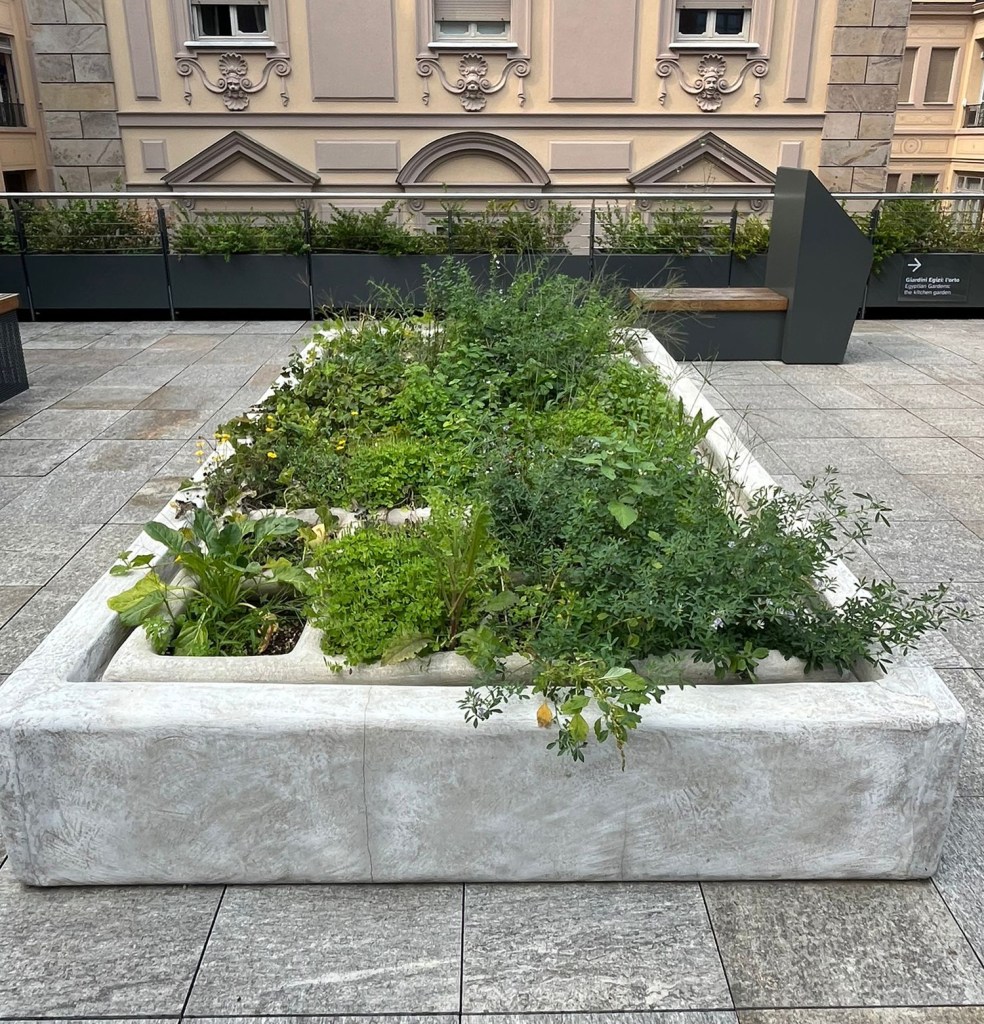
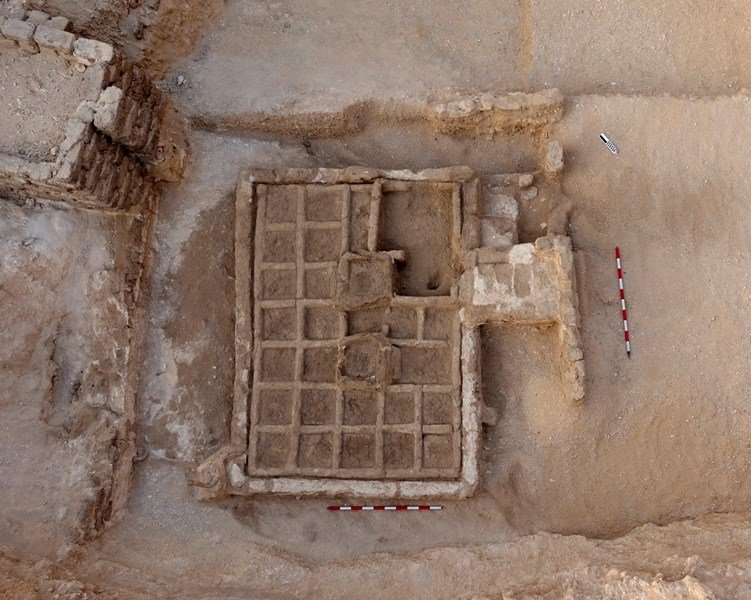
L’esistenza di giardini funerari nell’antico Egitto è ben documentata da testi e pitture. Ne volete visitare uno? Basterà salire sulla terrazza all’ultimo piano del Museo Egizio di Torino dove viene riproposto un giardino funerario di 4000 anni fa, ritrovato nel 2017 non lontano da Luxor, nella necropoli di Dra’ Abu el-Naga. Il giardino originale presenta una struttura a griglia suddivisa in piccole vasche quadrate riempite con terra fertile, racchiusa da un muro imbiancato e fornita di una scala di accesso. Sono stati ritrovati anche i resti delle piante coltivate, fra cui coriandolo, una varietà non dolce di melone e fiori della famiglia delle margherite.
Nell’antico Egitto, intorno ai palazzi del faraone, nei recinti dei templi, intorno alle case dei funzionari di corte e dei nobili e nei pressi delle tombe crescevano vasti giardini. Oltre al nutrimento e al prestigio sociale, assicuravano le offerte necessarie al culto divino e ai riti funerari: frutta, fiori, ortaggi venivano posti sulle tavole di offerta delle divinità e, confezionati in appositi contenitori, venivano deposti nelle tombe per fornire cibo al defunto nell’aldilà. A loro volta, i rituali facevano largo uso di incensi, profumi e unguenti prodotti a partire da piante e fiori appositamente coltivati. Il vino, in particolare, sostituiva simbolicamente il sangue del sacrificio.
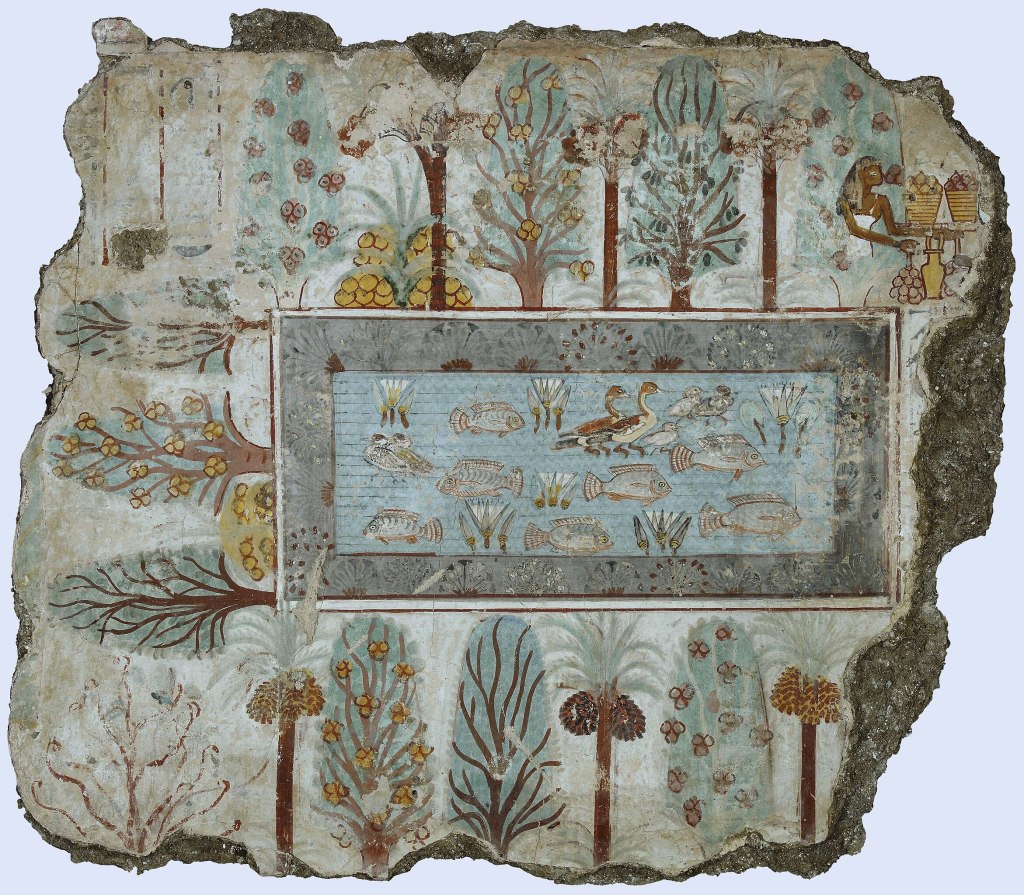
Questi giardini comprendevano sicomori, palme da datteri, fichi, viti, melograni, salici e tamerici ed erano organizzati intorno a un grande bacino d’acqua popolato da fiori di loto, da pesci ed uccelli.
Poiché molti monumenti religiosi – in particolare quelli a carattere funerario – venivano edificati in aree desertiche lontane dal Nilo e in condizioni di aridità assoluta, gli Egizi organizzarono sistemi di irrigazione dotati di canalizzazioni, dighe e bacini. Venivano anche scavate nel terreno ampie fosse circolari profonde fino a 10 metri, poi riempite con il fertile limo del Nilo, e abbondantemente irrigate.
Piante e fiori possedevano valore magico e simbolico: il loto blu, ad esempio, per il suo emergere dall’acqua al mattino ed immergersi nuovamente alla sera era associato al ciclo del sole, al suo rinascere ogni giorno e quindi all’eterno divenire, rappresentando così una promessa di resurrezione.
Mazzi di fiori che evocavano una speranza di vita venivano offerti al defunto sia nel giorno del funerale che in occasione delle feste celebrate nella necropoli; ghirlande di petali, bacche e foglie venivano poste sulla mummia e talvolta sul sarcofago. Poiché i fiori utilizzati erano quelli presenti in natura nel periodo del funerale, è possibile calcolare il periodo della morte, tenendo conto del tempo necessario per effettuare la mummificazione, di solito 70 giorni.
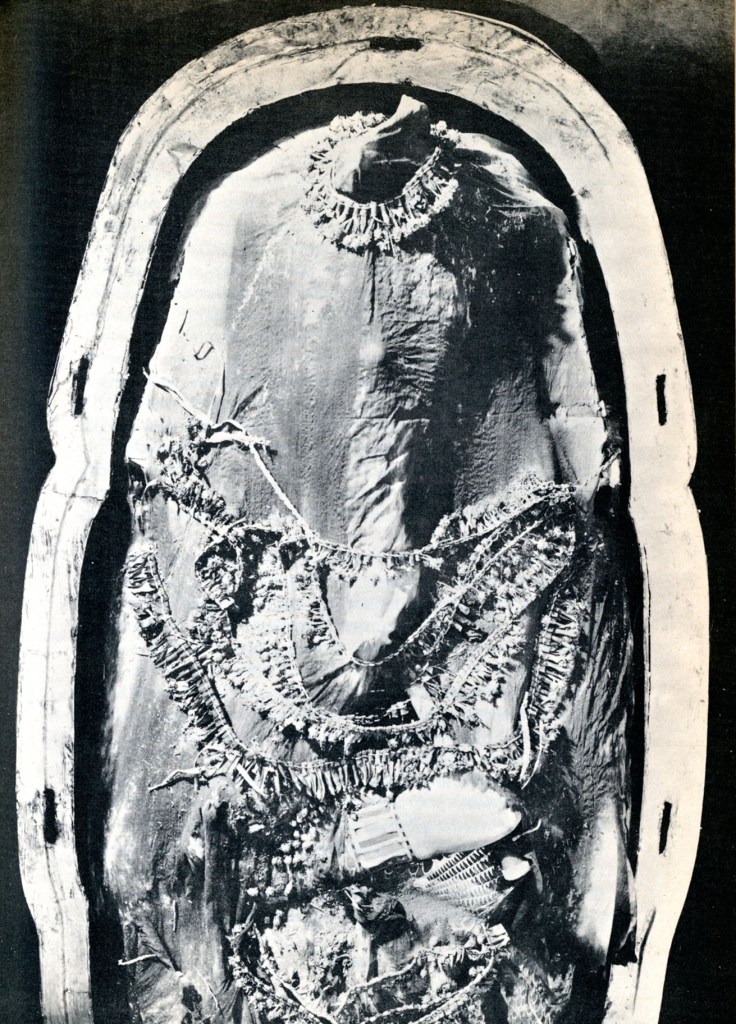
Ad esempio, le ghirlande trovate sul sarcofago e sulla mummia di Tutankhamon (Tutankhamon – La mummia) erano composte con foglie di ulivo, di palma, di salice, di melograno e di persea e con fiordalisi, papaveri, petali di loto blu, fiori gialli, bacche rosse e perline di maiolica colorata. Nella tomba (Tutankhamon – La tomba) Howard Carter trovò anche, appoggiati alla parete, i mazzi di giunchi e di rami di persea portati dai dignitari nel corteo funebre. L’analisi dei resti vegetali ha così permesso di collocare la morte del giovane faraone nei primi mesi dell’anno, fra gennaio e febbraio.
Dear friends speaking English, this is an home-made blog. I have no money to pay a professional translator, so I write English post by myself and – as you can see – I can’t write English language very well. So you can find a lot of mistakes in the articles: I beg your pardon. My English language level is: F(unny)! Will you pardon me?
Would you like to visit an ancient funeral egyptian garden? You can see one of them on the terrace of the Egyptian Museum in Turin. Here the archeologists recreated a 4,000-year-old funerary garden, similar to the one wich was discovered in 2017 not far from Luxor, in the necropolis of Dra’ Abu el-Naga.
The original garden features a grid structure divided into small square beds filled with fertile soil, enclosed by a whitewashed wall and equipped with an access staircase. Remains of cultivated plants have also been found, including coriander, a non-sweet variety of melon, and flowers from the daisy family.
In ancient Egypt, large gardens were cultivated around the pharaoh’s palaces, within temple grounds, around the homes of court officials and nobles, and near tombs. They provided food, social prestige, and the offerings necessary for divine worship and funeral rites: fruit, flowers, and vegetables were placed on altars as offerings to the gods and laid in tombs to provide food for the deceased in the afterlife. Rituals made extensive use of incense, perfumes, and ointments produced from specially cultivated plants and flowers.
These gardens included sycamore trees, date palms, fig trees, vines, pomegranates, willows, and tamarisk trees, and featured a large water basin populated by lotus flowers, fish, and birds.
Since many religious and funerary monuments were built in desert areas far from the Nile, the Egyptians organized irrigation systems equipped with canals, dams, and basins. Large circular pits up to 10 meters deep were also dug into the ground, then filled with fertile Nile silt and abundantly irrigated.
Plants and flowers possessed magical and symbolic value: the blue lotus, for example, because it emerged from the water in the morning and submerged again in the evening, was associated with the cycle of the sun, its daily rebirth and therefore eternal becoming, thus representing a promise of resurrection.
Bouquets of flowers evoking hope for life were offered to the deceased both on the day of the funeral and during celebrations held in the necropolis; garlands of petals, berries, and leaves were placed on the mummy and sometimes on the sarcophagus. Since the flowers used were those found in nature at the time of the funeral, it is possible to calculate the time of death, taking into account the time required for mummification, usually 70 days.
 Storie di cimiteri